|
In the Media |
|
My Articles |
|
Austin Fit Magazine Articles |
|
|
 |
|
Austin Runner Magazine Articles |
|
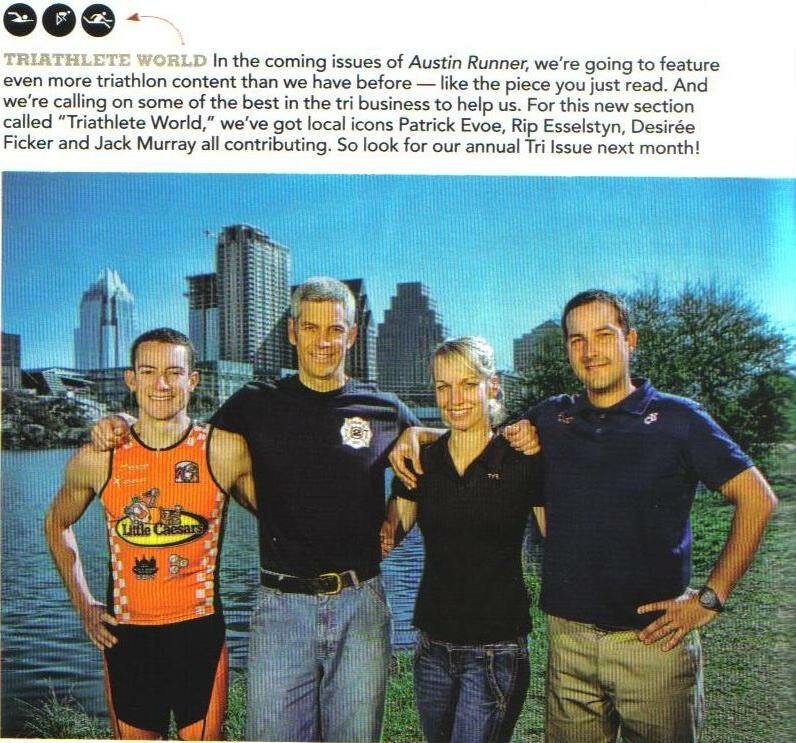
Starting Spring of 2009, I will be a contributing author for triathlon specific articles to Austin Runner magazine |
|
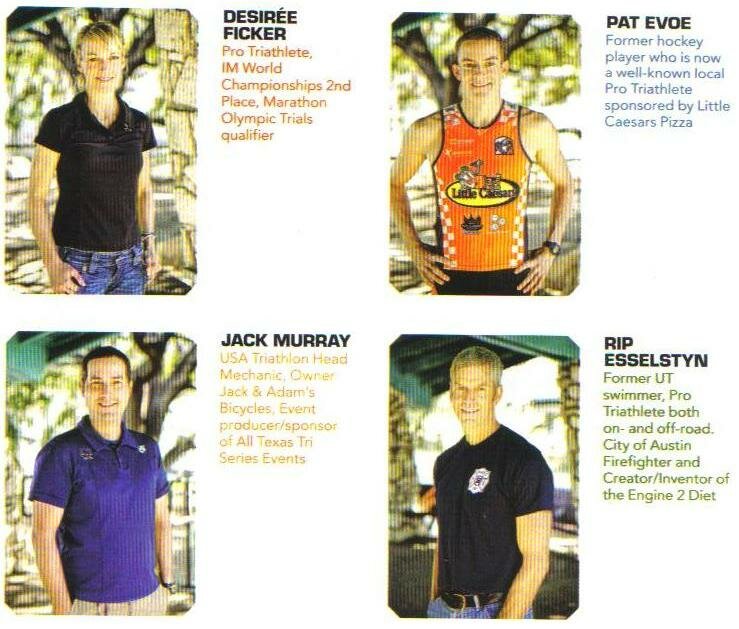
I wrote this article for Austin Runner Magazine in 2007. It's a training plan for a beginner to ramp up to complete a first Olympic Distance triathlon. This plan is for the first timer looking to cross the finish line, not the experienced triathlete looking to win an agegroup. I wrote this article for Austin Runner Magazine in 2007. It's a training plan for a beginner to ramp up to complete a first Olympic Distance triathlon. This plan is for the first timer looking to cross the finish line, not the experienced triathlete looking to win an agegroup.I wrote this article for Austin Runner Magazine in 2007. It's a training plan for a beginner to ramp up to complete a first Olympic Distance triathlon. This plan is for the first timer looking to cross the finish line, not the experienced triathlete looking to win an agegroup. I wrote this article for Austin Runner Magazine in 2007. It's a training plan for a beginner to ramp up to complete a first Olympic Distance triathlon. This plan is for the first timer looking to cross the finish line, not the experienced triathlete looking to win an agegroup.
|
|
|
Jack and Adam's Newsletter Articles |
|
I wrote this article for the September 2007 edition of the Jack and Adam's Bicycles Newsletter. It briefly covers the topic of nutrition in the morning before training or races. |
|
Consistency and Training
|
|
|
Masters Degree Thesis |
|
I decided to post a copy of my Masters thesis on-line. There are a couple reasons for this. First, when I was researching my topic, I found a couple theses on the web very helpful. So although the topic has nothing to do with racing or triathlon, I hope that somehow by adding to the collective knowledge on the web, I may help someone interested in my topic. Also, if you're having trouble sleeping one night, feel free to use this rather than counting sheep. I've also had a few friends and family members express interest in parusing it, so posting it here makes it easier to share with family and friends. |


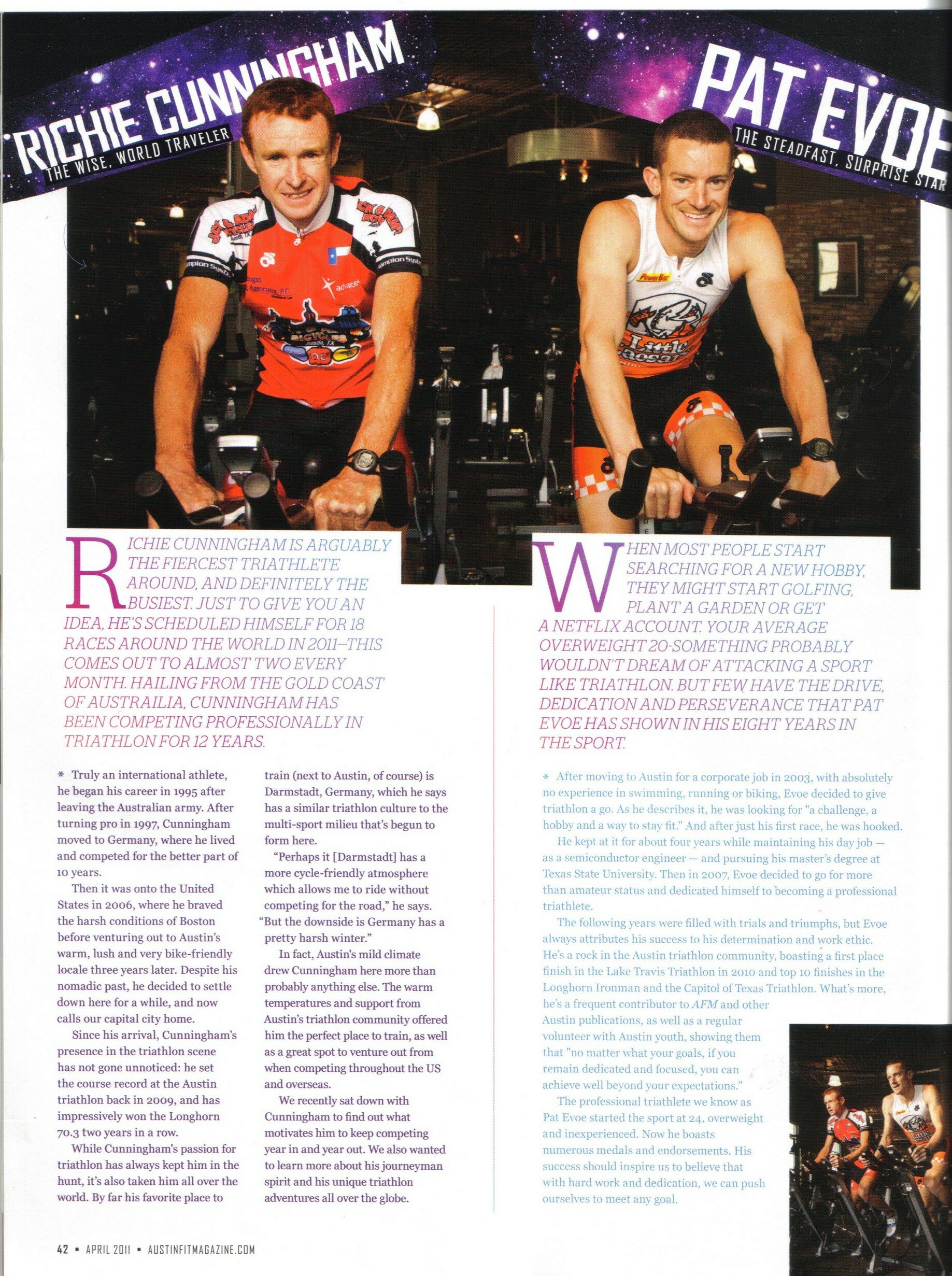 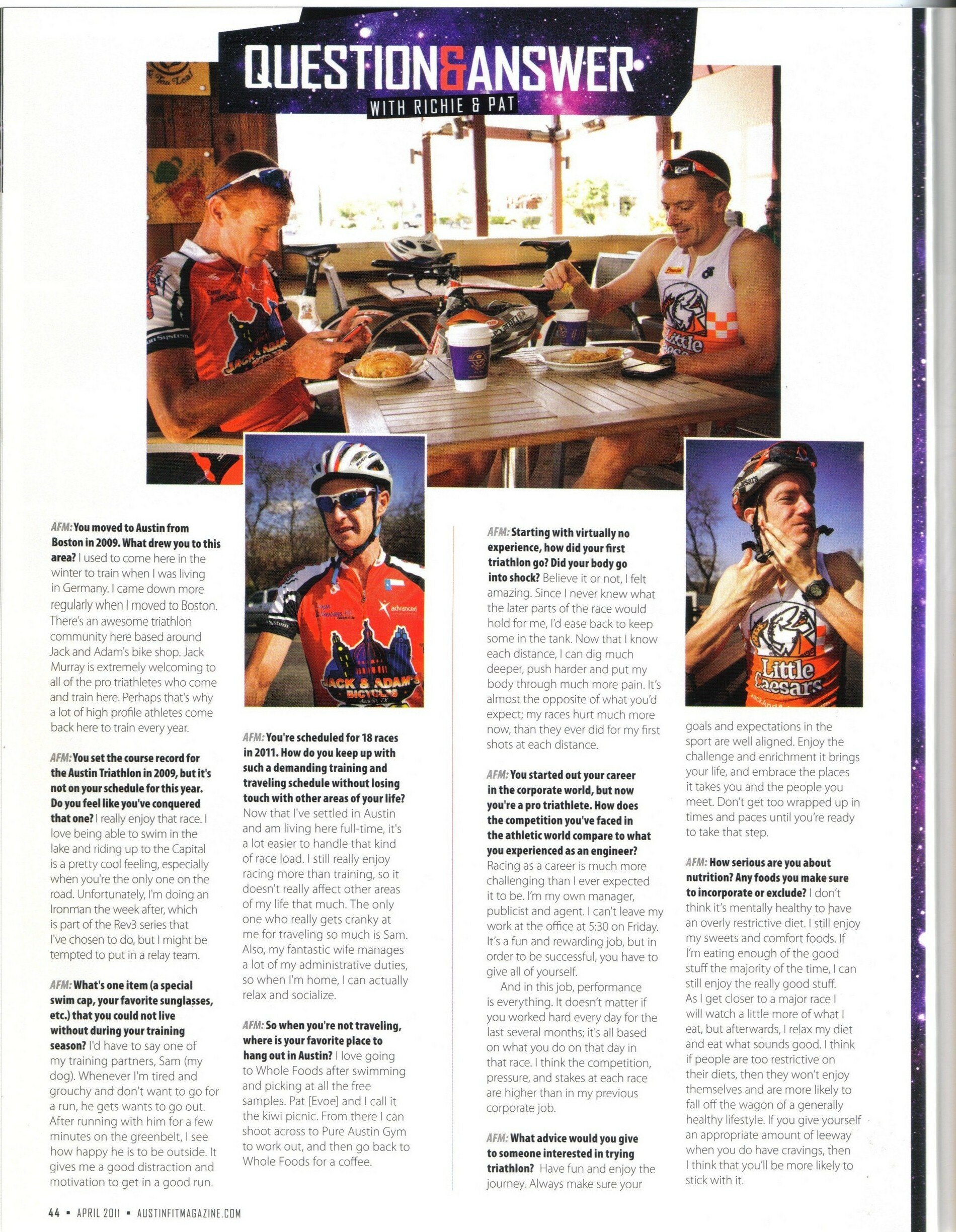  |
April 2011 Austin Fit Magazine triathlon issue. Feature on me and my training partener Richie Cunningham. |
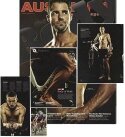
| This is a photo spread from Austin Fit magazine's "Body Issue" where it highlighted the bodies of different athletes from varying sports. | |

|
This full page advertisement featuring me in an Xterra Velocity 0.02 Speedsuit has been featured in triathlon magazines in the US as well as internationally. It was also posted at various locations in Kona during the 2007 Ironman World Championships. |
|
|
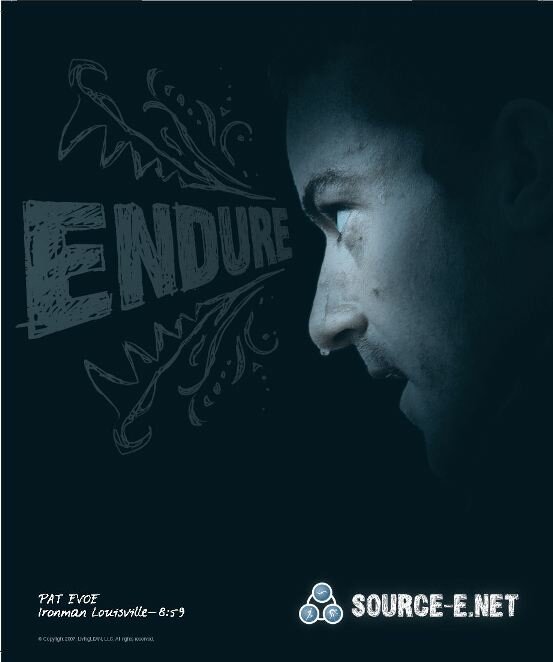
This full page advertisement for my coaches, Source Endurance has been featured in Competitor Magazine. |
|
|
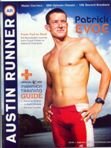
Austin Runner magazine covered my rise in the sport of triathlon in its September 2007 feature article as well as its cover photo. Click here to read the whole article. |
|
|
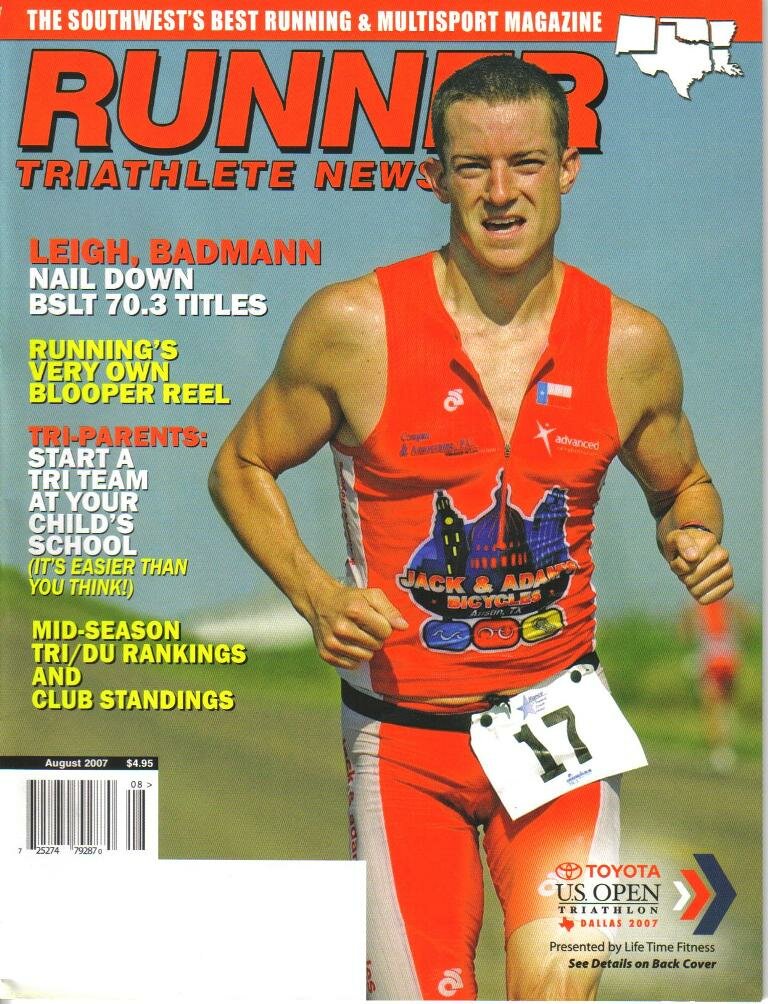
Runner Triathlete News used my Buffalo Springs Ironman 70.3 run photo on their August 2007 issue cover. |
|
An ad for Xterra Wetsuits running in Germany (I'm the one without the cool beard). |
|
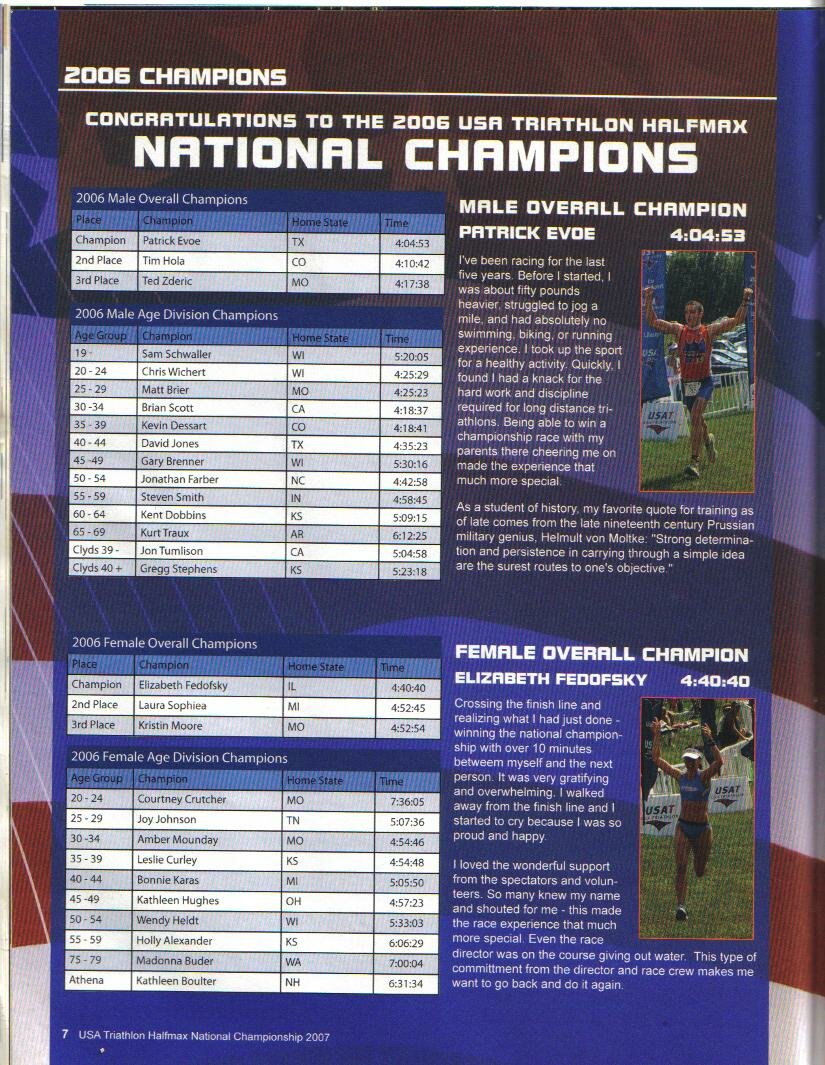
USAT Triathlon Life Magazine covered my win at the USA Triathlon 2006 Amateur Long Course National Championship. |
|
|
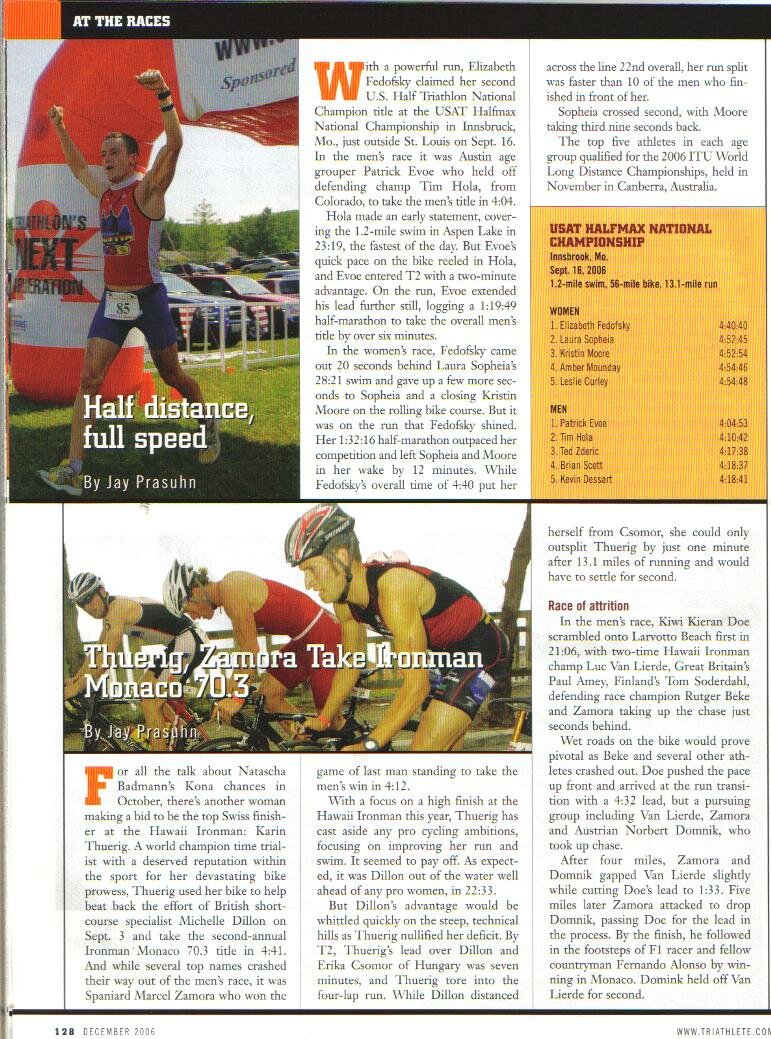
Triathlete Magazine's December 2006 coverage of my win at the USAT Long Course National Championships. |
|
|
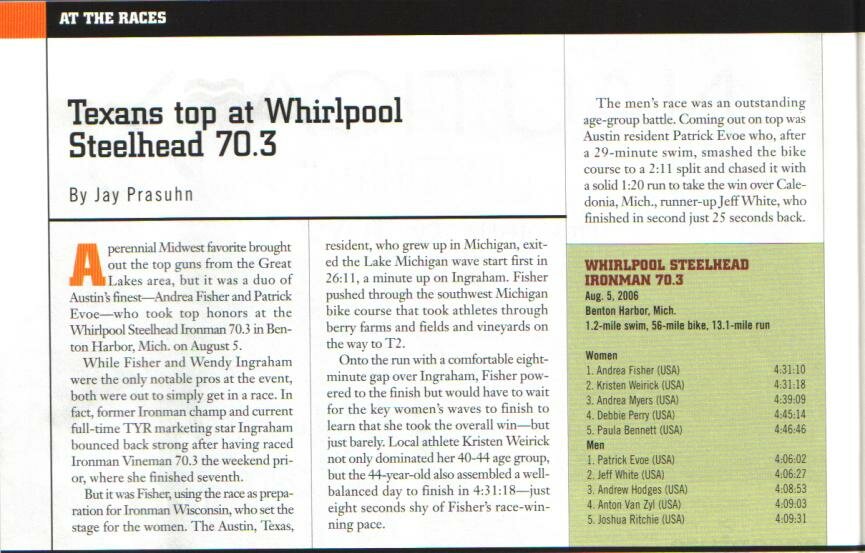
Triathlete Magazine's coverage of my overall win at the inaugural 2006 Steelhead Ironman 70.3. |